
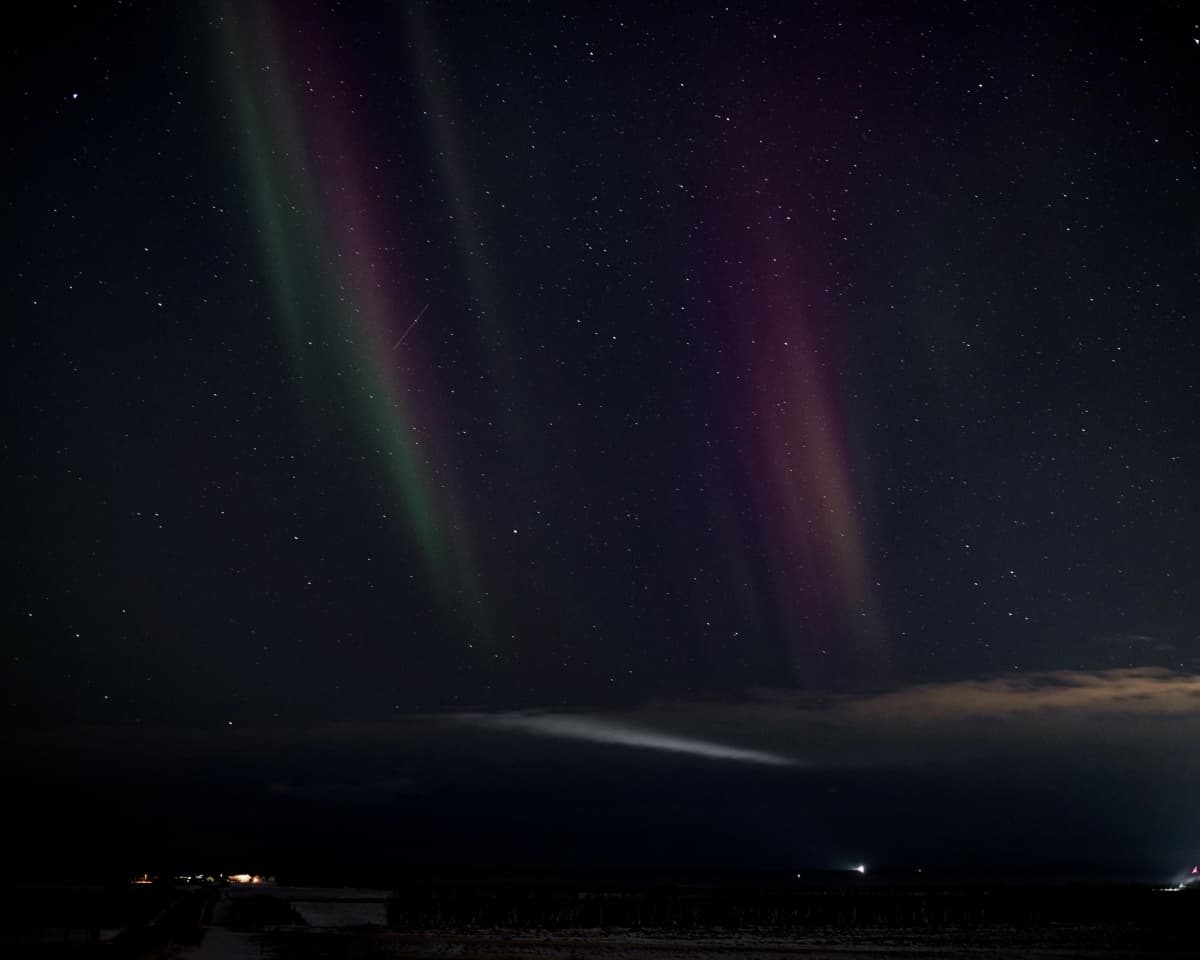
Photo by Joshua Chung
Part 1
Numbers are a funny thing. As babies, we learn it pretty much right after walking and talking — remember those wooden number blocks, or the donuts you had to stack in order? — and then for the next 20 years of our life it just keeps adding on, pun intended. It starts out pretty easy — oh, 2 + 2 = 4, yeah that makes sense — then there’s the curveball all kids face when they learn about negative numbers (a number less than zero? How?) — and then we add letters, we add symbols, we add Greek letters… it just keeps getting more and more complex. As in, we even named them “complex numbers”, like the mathematicians knew these poor high schoolers would be struggling to understand them.
Thankfully, I’ll be sticking to the positive, whole number side of things — but even then, you might find that on the extreme end of large quantities it can sometimes become more complex than the square root of -1.
Of course, infinity isn’t really a number. It’s not… quantifiable. So why am I starting with finite numbers?
I think the concept of infinity gets brushed over a bit because of how used to it we are from school. In math it’s just a tool — to find a limit, to describe sets, to denote bounds. It’s just one of the many symbols we learn, when it is really so much more. We lose sight of the scale in which infinity resides. I hope that through these much smaller finite examples, you might rediscover just how vast infinity seems, and how immeasurable of a concept it really is.
A Finite Amount
If I asked you to close your eyes and picture ten people in a room, I’m sure most of you could do so easily. You could probably give each one an identity too, one of someone you know. What if I asked you to picture one hundred people? A little harder, but still doable. You could put these ten people in a row, and then make ten rows. You might even still be able to give each person a unique identity.
What about a thousand people? Does that start to sound like a lot? Do you even know a thousand people? A 2008 study1 estimated that the average person knows about 600 people by name. That’s a decent amount, but it’s not a thousand. And in the world of numbers, 1000 isn’t even that much. If you’ve been to Broadway you might’ve gone to the Eugene O’Neill theatre, which has a seating capacity of 1066 people — and honestly, that theatre didn’t seem that big to me. Yet it’s more people than the average person knows!
Now if we’re talking big venues, maybe it’s easier to imagine the Mercedes Benz stadium. It’s got a seating capacity of 71,000 people. That’s seventy-one times the size of those Broadway Theatres. Think of how packed the Benz stadium is during a game or concert… and we aren’t even close to the millions yet.
The Atlanta Metropolitan area has around 6.4 million people — think everything within the 285 highway, and then some. Can you visualize what six million looks like? What about something small — like grains of sand. Six million grains might sound like a lot, but a cubic foot of sand contains around 1 billion grains. That means 6,000,000 grains amount to less than a cup of sand! Even a cubic foot is really not a lot of sand. A full beach can go into the trillions and trillions of particles — now our numbers are getting much, much larger.
Speaking of trillions, here’s a fun fact — our body is made up of around 30-40 trillion cells. For reference, the Milky Way galaxy has somewhere in the 200-400 billion number of stars. We have more cells in our body — wayyy more, like 100x more — than there are stars in our galaxy. Wow.
I think you get the idea. The larger the number gets, the more wild the examples I have to give. A billion is a lot. It’s almost three times the number of people there are in the entire United States. But in terms of sand, it’s barely anything. It’s interesting how the context in which a number is given vastly changes how we perceive that amount.
What about this one?
You know when you were a kid, and you would compete with someone else by saying a bigger number?
I have a hundred.
Well, I have a thousand.
Well, I have a million.
It didn’t really matter what the item was — it could be dollars, it could be Pokémon cards, it could be something as dumb as the number of fingers you had held up. You just had to have a bigger number.
There was this one hack that the kids in my school would use. “Well, I have a googol.” Have you heard of it? A googol is 1, with 100 zeros behind it (It’s also the name origin of a certain search engine). For those of you who want a visual, that’s:
10,000,000,000,000,000,000,000,000,000,000,000,000,000,000,000,000,000,000,000,000,000,000,000,000,000,000,000,000,000,000,000,000,000.
When I type it out it actually doesn’t seem like that much, right? Since the individual zeros are so small — but I promise, it is an incomprehensibly large number. It would stump all the middle school kids — except for that one nerd (me) who’d say:
“Oh yeah? Well, I have a googolplex.”
That’s ten to the power of googol, in case you didn’t know. As in, 1, with a googol number of zeros behind it. As in, ten to the ten to the hundredth power. As in, an uncountable number — and when I say uncountable, I mean quite literally uncountable. There’s only ten to the eightieth atoms in the observable universe — less than a googol, if you’re keeping track — which means if you were to try and write out a googolplex, you would run out of atoms to do so, even if you were using one atom per zero. A physically indescribable number.
And of course, then someone would always go, “Well, I have googolplex plus one…”
A Finite Time
But that’s enough of counting. Instead, let’s move to a different sort of value.
What would you consider a long time? It probably depends on the context, as we’re coming to see. A year? Two years? To Jacob, fourteen years of labor was like nothing2 (though I hope you wouldn’t be as big a simp as he was).
Or maybe I’m starting too large. An hour can seem like a long time — you’re in a boring lecture hall, watching the clock slowly tick by, just waiting for your professor to dismiss you. Even a minute can seem impossibly long — try planking or wall-sitting for a minute and it’ll feel so much longer than if you were playing a video game. Or that minute right after you ask out your crush, and you’re waiting for a response…a
But anyways. Let’s go back in time, just a little bit.
Archaeologists trace the emergence of human civilization to the Neolithic Revolution, around 12,000 years ago. This was a shift from the hunter-gatherer ways of old to agriculture, permanent residences, towns, villages, and cities. But before that, they estimated humans had been around for 2-3 hundred thousand years. Keep in mind, I said I’d be talking about time on the scale of the millions. Us humans don’t even get to be part of that conversation.
Let’s jump even further back to my favorite thing when I was a kid — sixty-five million years ago, when dinosaurs roamed the earth. Right before a big rock blew them all away. And they’d been there much longer than that — more than two hundred million years earlier.
But of course, Earth is believed to be much, much older than that. 4.3 billion years older, actually. My old pastor had this fun fact when he was talking about the vastness of God once: if all of earth’s history were to be put on a 24 hour clock, dinosaurs were only around starting at 11 p.m. The last hour of the day. Humans? We come in about 1 minute before midnight. And modern human civilization? Those 12,000 years of technological development? Yeah, that’s about 1/4th of a second.
Crazy, isn’t it?
Really puts that long minute of waiting into perspective. I think your crush can take just a little bit longer.
A Finite Scale
Growing up, I had a phase where I was really into outer space — stars, planets, constellations, comets, all of that. It still interests me now, though more in a, “oh that’s Virgo, cool” sort of way than a pushes up glasses “ahem did you know that Virgo is the second largest constellation?” vibe.
One thing that never ceases to amaze me, however, is that moment when you’re out at night, preferably somewhere without a lot of light pollution, and you just tilt your head back and look up at the sky. You see the thousands of pinpricks speckling the black canvas above, winking at you from millions of light years away, filling this immeasurable expanse, and everything just feels so big.
And you feel so… small.
It’s such an amazing and yet humbling feeling. We get so wrapped up in the busyness of the day to day, in our own problems and issues, and to realize that it really is such a little part of a massive universe brings a totally different perspective.
“Massive universe” is a rather general description, though, so let’s get more specific.
Earth is pretty big, right? Large enough that people used to (some still do, I suppose) think the earth is flat because any way you looked the horizon seemed to be a dead straight line. That’s a leading question, by the way — you and I both know compared to most celestial objects Earth is a midget.
You might have learned this in science class. Remember the Great Red Spot on Jupiter? It’s a giant wind storm on the largest planet in our solar system and it’s so big that you could fit 2 earths inside of it. Yeah — our planet fits in the storm of another planet.
Think about how we usually picture our solar system. Bright yellow sun, with eight planets orbiting around it in concentric rings (R.I.P. Pluto). Do you know just how inaccurately scaled our diagrams have to be to fit every planet on one page?
There’s a fun website called “If the Moon Were Only 1 Pixel,”3 which creates an accurate scale model of our solar system with Earth’s moon the size of a single pixel. For reference, that means each pixel is about 3500 km, or as the site says, roughly the distance from New York to Las Vegas. The sun is a big yellow circle, fills up like a fourth of the screen — and then you start scrolling.
And scrolling.
First up is Mercury — 58 million kilometers away from the sun. I just scrolled 16,000 pixels to see my first planet. Earth? 150 million kilometers. My fingers are tired. I’ll include Pluto here for the sake of knowledge — it’s 6 billion kilometers away. 40 times further away from the sun than Earth is. At the end of the map, right after Pluto, there’s a quote that says, “We’ll need to scroll through 6,771 more maps like this before we see anything else.” That’s wild.
There're actually several scale-models of the solar system out there, but it’s probably not what you’re imagining. They don’t exactly fit in a building, you see. Gainesville, GA has a “Solar System Walk” — a 1.8 mile walk with the planets correctly sized and spaced out at a 1:2,000,000,000 scale. At the end of that 1.8 mile walk, they were kind enough to include Pluto — a tiny ball, less than an inch in diameter. Less than an inch, and you walked almost 2 miles to get to it.
The Oort Cloud comes after Pluto and marks the edge of our solar system — that’s the 6,771 more maps to scroll, remember — which means if you wanted to walk past Pluto to the Oort cloud, you’re walking another 12,000 miles. We drive about 12,000 miles in a year.
I think you get the point, so I’ll skip to the big one — what about our universe? Well actually — we have no idea. Not because it would be immeasurable, but because light literally doesn’t travel fast enough for us to see further than 46.5 billion light-years away. So the appearance of anything further than that hasn’t reached us yet in order for us to see it — and when I say hasn’t reached us yet, I mean as in, light that has been traveling towards us… since creation itself.
An Infinite Number
Now I’ve given a bunch of examples of big finite numbers. So what? I haven’t even gotten to infinity yet. And that’s because infinity is… quite hard to explain, actually.
I wanted to give these examples to help establish the scale with which we’re talking about here. Some of these numbers are mind-bogglingly large, in some cases, physically indescribable. And yet, googolplex in comparison to infinity? It’s nothing. It’s not even a fraction of infinity. Not a speck on a page. A number that is physically impossible to just write out is, in essence, the same value as 1 with respect to infinity.b
But what is infinity?
I want to take us back to calculus for a second (Or if you never took it, forwards, I suppose). Do you remember the phrase, “the limit as x approaches infinity?” You might recall it better like this:
limx→∞ f(x)
Now f(x) can be any sort of function. It could be exponential, it could be trigonometric, it could be a simple x + 3 or a complicated integral. For this example, I’ll use something simple:
f(x) = 1/x
You probably know just from looking at it, that the answer to the limit as x approaches infinity is 0. After all, one divided by infinity is zero. But first, I want to think of it like this.
There is an infinite set of numbers between 0 and 1. Infinite. And if you plug in any of those numbers, you’ll get anything from 1 at x = 1, to… well, infinity. And if we go past 1, we could go anywhere from the range of 1 to googolplex, and the answer we would get for f(x) still wouldn’t be 0. It’d be basically zero, in any practical, useful sense — but not zero. It is only at infinity that we see what the function becomes.
So I have a more interesting definition for infinity. To me, infinity is not a boundless quantity, or a continuous line. To me, infinity is the state at which the true nature of something is revealed. It’s only when we understand the infinite scope of a function that we find its true value. And it’s only when we try to understand the infinite scope of God that we can even hope to know Him.
Let me take back what I just said.
You should know that we will never be able to fully understand an infinite God. It’s not possible — he says so Himself4. I mean, our greatest minds say that “if you think you understand quantum mechanics, you do not understand quantum mechanics.” If we can’t even comprehend something that small, how can we with something so big? (That’s a joke, by the way — the statement, not quantum mechanics. Quantum mechanics is no joke.)
However, God has chosen to help us understand Him, because He wants us to know Him. He wants us to have a relationship with Him. And he’s done this in so many ways: through creation, through prophets, through teachers, through Scripture, through Jesus. But often, our view of God becomes misconstrued — especially if we begin to define him in the limited, physical terms that we know to be our own reality. I’m guilty of this. I constantly need to be reminded that the God we serve isn’t one that we can place into boxes or categories of our own creation: He is truly above our wildest imagination.
You might notice that the section titles going forward seem to be a bit redundant. After all, omni-anything already implies infiniteness. And you’d be right — they are redundant. I just think they sound cool.
An Infinite Omnipresence
Stop me if you’ve heard this before:
“I want to make more time for God.”
Maybe it’s not a want, but a need. Maybe it’s not time, but space. The meaning is the same — God is not as prevalent in my life as I would desire Him to be. The reasonings can vary: too much schoolwork. Too many extracurriculars. Long work hours. Spouse. Kids. League of Legends (I know this is true for some of y’all). Oftentimes it’s the answer to the question, “so what is your prayer request?” Or, “What are you working on?” Or, “How are you trying to grow in your walk with God?” I can’t count the number of times I’ve heard this answer before — not just from other people, but from myself as well.
I hate this phrase.
Don’t get me wrong, it is absolutely true — we all need to make more time for God. You think you spend enough time in His Presence? You don’t. More on that in a sec. You think you know Him well enough? You don’t. We constantly need to make more time for God — every day, every hour, every second.
But I hate this phrase.
Have you ever stopped to think about how stupid it sounds?
Imagine a king seeks the audience of a farmer working in his kingdom. In what world would that farmer have the authority to say, “sorry — let me make some time in my schedule for you.” If the king requested his presence, you’d better hope the farmer drops everything and goes immediately. Nothing could be more important.
Yet we do this all the time with God.
I’m supposed to do my morning devos, but I woke up late. Crap — got to get to work. Guess I’ll hold off on devos till later. Got homework due tonight — I’ll read the Bible later. Dang, life is getting busy. I can shorten my quiet time.
Is work more important than God? Is that assignment? Is your life?
No, it’s not. We’re called to seek first the Kingdom of God and his righteousness5 — not second, not third. First.
By the way, all those examples I gave — those are just the concrete times we’ve marked out to spend with God. Do you know how often the Bible says we should be with Him?
Continually6.
Always7.
Is that possible? Obviously not.
We are finite beings — and not only that, finite, imperfect beings. We mess up all the time. So how are we supposed to continually, always be walking with God?
We first have to reframe our perspective.
You know that farmer? Would they ever be the one to schedule an appointment with the king? They could request one — but the decision isn’t up to them. The decision is up to their boss. In the same way, we are in no position to be the ones that say, “okay God. I have time. Come, let’s meet up.” That is entirely up to God.
Here’s the amazing part.
I don’t think most kings have the capacity nor the desire to meet up with their lowest employees. But God does — He has both the capacity and the desire. He loves us.
The Bible even tells us how much he loves us — multiple times. One that sticks out to me is this:
For as high as the heavens are above the earth, so great is his love for those who fear him; as far as the east is from the west, so far has he removed our transgressions from us.8
David gives us not one, but two unquantifiable metrics of God’s love — the distance of the heavens to the earth, and the east from the west. The Hebrew word used for heavens here, שָׁ֭מַיִם (ma-yim), is multi-meaning, depending on the context. One is the sky — which if we want to say is the physical atmosphere, is about 6000 miles. But it can also mean the universe — something unobservably large, as I mentioned earlier — or even, the dwelling place of God Himself. It doesn’t tell us which definition David meant, but based on what comes after I would lean towards one of the infinite ones. The east and west, after all, aren’t physical places. They’re concepts: in our spherical world, east goes on forever, as does west. It is a limitless descriptor of God’s love.
He loves us so much that He knows the number of hairs on our head9. He is the one who seeks us out10. He is the God who leaves the ninety-nine sheep11 and goes to find the one lost lamb. That lamb? That’s me and you.
And when does He do this? Not just when we’re lost, but all the time. God is always by our side12*, whether we’re in the green pastures and still waters or in the valley of the shadow of death13*. No matter what, He is with us.
So you see?
We don’t choose to be in the presence of God or not. We are always in the presence of God, because He chooses to be with us at all times. He is with us when we wake up, when we go to class, when we go shopping, when we do our homework late instead of doing quiet time, when we worship and praise Him and when we stumble and fall. God chooses us.
It’s not a matter of making more time for God. We can’t — because He has already made all the time to be with us. Instead, what we need to do is acknowledge Him14 more and more, because He is always there, directing the path. And not just your path and my path. Whether it’s your friend or your enemy, He is there, walking with them. He is always by everyone’s side.
But how?
An Infinite Omnipotence
In the beginning, God created the heavens and the earth15.
This might be the most famous Bible verse ever. Or at least, in the top 3. It is, as the verse says, the very beginning.
But what does that mean?
It doesn’t say, “In the beginning, God became,” or “In the beginning, God arrived.” Instead, God already was. “In the beginning, God created.” He already was, and He was already doing. Need more convincing? “In the beginning was the Word.”16 The Word already was. So how can it be a beginning, if God was clearly there before that?
Well, once again, I think this requires a bit of a perspective shift — away from how we might perceive time. See for us, time is a ray. I say ray because a line by definition extends in two directions, but time doesn’t. Not for us. Once it passes, it’s gone — you can’t go back.
God, of course, is not constrained by time17. How do we know this? Well for one thing, He’s the one who made it.
Don’t believe me?
And God said, “Let there be light,” and there was light. And God saw that the light was good. And God separated the light from the darkness. God called the light Day, and the darkness he called Night. And there was evening and there was morning, the first day.18
It’s interesting because God doesn’t create the sun and the moon, or any of the celestial bodies for that matter, until the fourth day. When He makes them, He even says they will be used to separate the day from the night19. So what’s the deal with the light and the dark from the first day?
It’s not just light and dark God created. On the first day, God literally created, the first day. The very first. Followed by the first night.
In ancient days time was measured a bit differently than it is now. After all, the sundial wasn’t around until 1500 BC20. Hours weren’t a precise measure of time, because it was mostly gauged off of feel. The two constants when it came to the passing of time, then, were sunset and sunrise- the evening, and the morning.
You see? On day 1, by creating day 1, God created time.
So there was no “before that”. The beginning in verse 1 isn’t a beginning in the way we think about it, because time didn’t exist.
And that gives us the “how” — as in, how can God spend an entire lifetime with me — and also with you, and with everyone else? He can because He is above time. He created time. It’s not like He’s walking by us, and as we get a minute older, He also gets a minute older. The God that is by your side on your deathbed is the same God that is by your side at your birth — same, not in the identity sense, but literally the same — because God is constant.
At infinity, we see the true nature of things. At infinity, the true nature of God is revealed — and it’s crazy because there isn’t a descriptor for it. As God himself says, “I AM WHO I AM.”21 He just… is. Not was, not will be — He is.
An Infinite Omniscience
I’m sure at some point in your life, you’ve questioned why God was doing something — a trial, a suffering, a temptation — while it was happening. But then afterwards you say something along the lines of, “I didn’t get what God was doing at the moment. But looking back, now I understand why He let that happen.”
I want you to ask yourself this question: do you really understand?
It’s true — God absolutely does work22 in many ways, all around us. But I am hoping that by now you see how limited of a perspective we have when it comes to the matters of an infinite God.
You know the verse, “and we know that for those who love God all things work together for good, for those who are called according to His purpose?”23 It doesn’t say, “and we know that for you.” It says, “those who love God.” As in, plural. Let me give an example.
I didn’t get a job once. It was something I really wanted, in a field I had a strong passion for. I felt like I was a good fit, and I felt like the interview went really well. So naturally I questioned God when I was rejected. At some point afterwards, I had this thought: if I had gotten that job, I wouldn’t be doing this now. Not this as in writing this piece, but whatever I was doing back then. I’m sure you all have had similar thoughts before.
What about the person who did get the job though? Wouldn’t it be natural that their thought would be, “wow! I really see how God moved in my life to provide me this opportunity!” Have you ever thought about that person?
When we talk about “God’s plan,” it’s not just — “God’s plan for me” — but we tend to treat it as such. Call it our shortsightedness, or our self-centeredness, but we try to make sense of what God is trying to do when that is both not within our rights and not within our capabilities. God’s thoughts are not our thoughts, and His ways are not our ways24. This is a good thing, by the way. The depths of His wisdom and knowledge are infinite — His judgements are unsearchable, His ways inscrutable25 — while ours? They are very much finite, searchable, and scrutable.
I think it’s helpful to keep in mind that God’s will reaches a larger scale than we could ever imagine. We are a tiny being on a tiny planet in an immeasurably large universe — a universe that God has planned everything in. The multitudes of stars and their names are by His design26, the changing of the tides and seasons all according to his command — and yet we wonder whether that billboard on the highway is a sign from God to ask out a girl, or that person who cut you off is meant to teach you a life lesson.
I’m not saying these aren’t, by the way. They might very well be divine intervention. What I am saying is that we need to stop worrying, and start having faith. It’s fine to want to understand God’s plan for you — natural, even. The danger comes when we start trying to evaluate every little thing that happens, thinking that we know what He has in store for us when really, all we are seeing is a tiny pinpoint of an infinitely larger picture.
But there are things we do know. We know that God’s plan is good. Not pleasing, not comfortable — good. It is a plan carefully cultivated for each and every person, a plan that spans way past our finite window of the world and anything we could hope to see with our limited perspective. Sometimes, we might catch a glimmer of it — a dim reflection in a mirror, just a part of the full picture27 — and it is in those moments that we give thanks to the Lord, for He is good.
An Infinite God
I keep stressing how impossible it is for us to even begin to comprehend God — His power, His presence, His plans — but I don’t want to write all of this and end there. We’re not supposed to do nothing and just accept that God is infinitely out of our reach.
The natural question then becomes: how do we, as finite beings, approach an infinite God?
Well, He answers this in scripture — as He does all things. He tells us to approach Him with confidence,28 and that if we seek Him with our whole heart we will find Him29. But what does it mean to approach with confidence?
The Greek word used in Hebrews for confidence is παρρησία (parrésia): all out spokenness, i.e. frankness, bluntness, publicity — (by implication) assurance. It portrays the freedom of someone to speak, act, or approach without fear — fear of judgement, fear of stepping out of line, fear of rejection. God not only lets us come to Him, He wants us to come to Him — and to come without fear of repercussions.
There is one problem.
We are not just finite, we are broken. All of us have sinned and fallen short of the glory of God30. There should not be a way for us to approach a holy, perfect God, unless we were ourselves holy and perfect. And yet because of His love for us, we can.
We needed a bridge between the imperfect and the perfect, between the finite and infinite. That’s where Jesus comes in. He was both the finite man, living among us, and the infinite God. Through Jesus and his sacrifice on the cross, our sinful selves can come with confidence before the Lord. Even though we constantly fall short and turn away from Him, we don’t have to fear the judgement we so rightfully deserve for our iniquities because of our Savior.
I am sure that what I said here isn’t new to you. Jesus died for our sins — this is the core tenant of everything we believe in. Yet it’s so easy to lose sight of the magnitude of what this means. Jesus connects us — our finite, flawed, single digit beings — to infinity. Somehow, we can have an intimate, personal relationship with the everlasting God, the Creator of the ends of the earth (another immeasurable description, if you think about it)31. Isn’t that amazing?
So then, what should we do?
Seek him with our whole heart. That’s it.
Well, I say that, but it’s a lot.
Remember, God makes time for us — we don’t make time for God. He is always there. And if he is always there, we must always be looking towards him. Of course we’re not going to be perfect — he doesn’t expect us to be. That’s why Jesus is so necessary. We can try, but we won’t always be seeking after God. When we do though, we have to make sure we do it with our whole heart.
In the beginning, this is tough. It’s maintaining your daily disciplines — reading the Bible, praying, meditating on his word, spending solitude with God, fellowshipping with believers. It’s actively, repeatedly turning your thoughts away from the things of the world — away from the idols of money, or career, or porn. It’s choosing God when you could choose other things — especially easier things.
God is good because it doesn’t stay this way. Of course it will be hard sometimes. Life is life, and faith is not a promise of heaven on earth. Yet as we draw near to God, he draws near to us32. The more we seek Him, the more we find Him, and the more we find Him, the more we love Him (yep, I took that straight out of the song). It is, in the engineer’s world, a positive-feedback loop. The more we look to God, the more we want to look to God.
It might feel like your walk with God is a struggle. Trials come, and life really can seem so, so hard. But it does not have to be hard — Jesus says his yoke is easy, and his burden is light33. It is still a yoke, don’t get me wrong. Yokes are heavy things. But it is easy and it is light because yokes are not meant to be held by one person. They are meant to be held by two.
On one side, there’s us — the 1/4th of a second species, the one pixel, the lowly farmer. But on the other side?
There’s God.
And He is infinite.
Footnotes
a I want to add a little note here to anyone who’s a young-earth creationist (For those of you unfamiliar, YECs are those who have a literal interpretation of the Bible and the creation story, placing Earth at around 6000-10,000 years old). Nothing but love, and I respect that you have such a faithful view of the literal text of scripture. But as someone who grew up loving dinosaurs, I’ll be talking about time in the span of millions of years — which I think we can all agree is a <em>long </em>time. Also, I <em>promise </em>that scientific discoveries like these <em>do not </em>contradict what scripture says — though if you are a YEC, I’m sure you’ve had that said to you many times before. ^
b Side note — within infinity, there are actually even more infinities. Kind of. We can form numbers into “infinite sets” — for example, the “infinite set of all whole numbers,” or “the infinite set of all real numbers” — and they would have different magnitudes. The infinity that represents all real numbers, is infinitely larger than the infinity that represents all whole numbers. But both of them are still infinity — they are already an unquantifiable amount. One is just… unquantifiably more unquantifiable than the other. ^
1 www.princeton.edu/~mjs3/mccormick_salganik_zheng10.pdf ^
2 Genesis 29 ^
3 joshworth.com/dev/pixelspace/pixelspace_solarsystem.html ^
4 Ecclesiastes 3:11 ^
5 Matthew 6:33 ^
6 1 Chronicles 16:11, Joshua 1:8, 1 Thessalonians 5:17, Psalm 1:2 ^
7 Psalm 16:8, Psalm 34:1, Psalm 62:8, Psalm 105:4 ^
8 Psalm 103:11-12 ^
9 Matthew 10:30 ^
10 Ezekiel 34:11 ^
11 Luke 15:4-7 ^
12 Psalm 118:6, Deuteronomy 31:6, Isaiah 41:10 ^
13 Psalm 23:1-4 ^
14 Proverbs 3:5-6 ^
15 Genesis 1:1 ^
16 John 1:1 ^
17 Psalm 90:4, 2 Peter 3:8 ^
18 Genesis 1:3-5 ^
19 Genesis 1:14 ^
20 www.cabinet.ox.ac.uk/oldest-sundials ^
21 Exodus 3:14 ^
22 John 5:17 ^
23 Romans 8:28 ^
24 Isaiah 55:8 ^
25 Romans 11:33 ^
26 Psalm 147:4 ^
27 1 Corinthians 13:12 ^
28 Hebrews 4:16 ^
29 Jeremiah 29:13 ^
30 Romans 3:23 ^
31 Isaiah 40:28 ^
32 James 4:8 ^
33 Matthew 11:30 ^